





The SaaS link building guide: 21 strategies and examples for 2026
Looking to get started with link building? Grab a coffee and enjoy this complete SEO link building for SaaS guide + free checklist.
Read More


If you’re serious about growing your SaaS business in 2026, you can’t afford to sleep on SEO.
Yes, AI search engines have become central to the customer journey. They’ve changed where discovery and consideration starts.
Buyers now form shortlists in Claude, ChatGPT and Google’s AI Overviews before they ever click a result. Impressions are climbing while clicks fall. And some teams are drawing the wrong conclusion: that SEO no longer matters.
SEO still matters. What’s changed is what SEO needs to do.
Ranking #1 on Google is no longer the whole game. Winning organic growth in 2026 means showing up across the full buyer journey and treating SEO and AI search as one connected organic growth system, rather than competing channels.
The brands building compounding organic growth systems are seeing results that speak for themselves:
🚀 Meridian doubling organic demo requests
📈 Rezi increasing revenue by 86% in 18 months
🎯 Maze scaling monthly organic signups by over 283%
If you’re ready to build an SEO strategy that works in the age of AI search and drives SQLs, activations and long-term SaaS growth, you’re in the right place.
Every step in this SaaS SEO guide falls into one of three phases. Together they form a compounding system, not a one-time campaign.
Now that you understand SEO’s role in holistic organic growth for SaaS businesses, let’s move on to tactics. Here are 14 steps you can take to create an organic growth channel that compounds over time and delivers results.
Before you even think about SEO, you need to get your GTM strategy straight. Are you gunning for volume with a self-serve model, building traction with SMBs, or playing the long game with enterprise deals?
Whichever you choose, it’s going to shape your organic growth strategy from the ground up, from how you structure your content to which SEO metrics matter most.
And SEO and GEO can (and should) look very different depending on whether your priority is signups, product activations, or sales-qualified leads. That’s why we recommend reverse-engineering your organic growth strategy: starting with your desired outcome, then designing your tactics around it.
When determining your GTM motion and setting your organic growth goals, start with these questions:
Now take a look at each of these go-to-market motions to pinpoint which category your SaaS fits into.
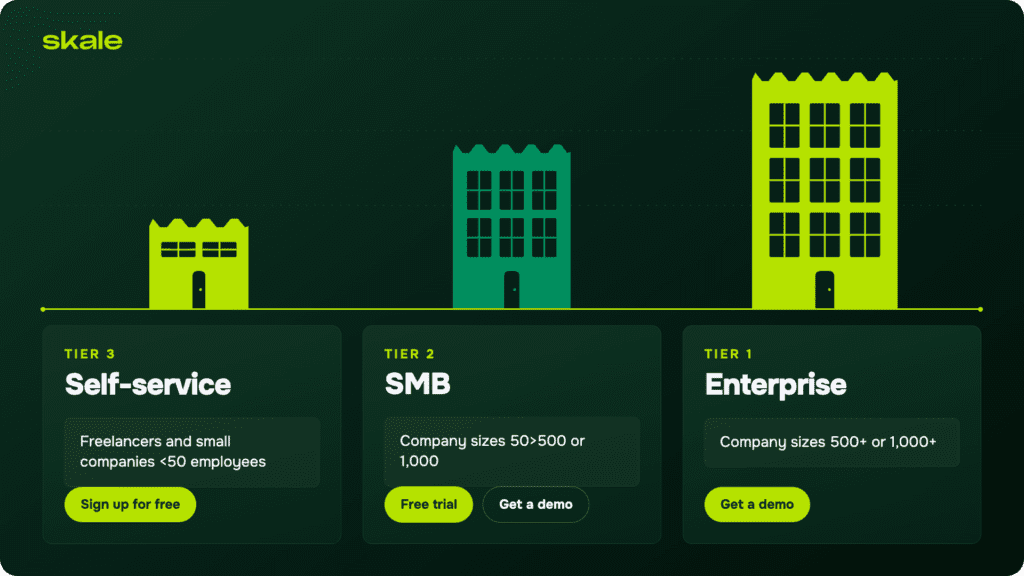
This approach is all about scale. Think tools like Notion or Canva, where users discover the product, sign up and get started all without needing to speak to anyone. It’s a low-touch model that relies heavily on product-led growth.
👉 SEO focus: Expert-led, informational content designed to attract and educate at scale.
👉 GEO focus: Track high-volume discovery prompts in AI search engines like ChatGPT and Claude. Then, build AI brand mentions in relevant third-party content to boost your chances of appearing in “best [category] tools” AI answers.
Targeting small and medium-sized businesses often involves a mix of self-serve options and light-touch sales support. SMB buyers rarely have a long approval chain, so decisions move fast. But buyers still need enough confidence to commit. Here, you can preserve resources by maintaining a balance between SEO automation and personalized support.
👉SEO focus: Educational content, templates and use case-driven pages that help buyers make confident decisions.
👉GEO focus: Target the mid-funnel AI prompts SMB buyers use when narrowing their shortlist, like “[your product] vs [competitor].” Getting cited in the comparison content and use-case-specific listicles that AI systems pull from is where visibility is won.
With enterprise, you’re focused on selling to large businesses and corporations. In this GTM motion, you need to play a longer game. Sales cycles are slower, deal sizes are bigger and multiple stakeholders are involved. Relationship-building is key.
👉SEO focus: Trust-building content like case studies, ROI calculators and strategic whitepapers that C-level executives can get real value from.
👉GEO focus: Earn AI brand mentions in analyst content and trusted editorial sources. These are significant authority signals and increase your chance of landing a mention and a citation in AI answers for users making high-stakes buying decisions.
Once your GTM motion is locked in, and your goals have been reverse engineered, the next piece of the puzzle is knowing which metrics actually matter. This requires understanding the difference between leading and lagging metrics.
Leading metrics show whether SEO work is starting to create movement before commercial outcomes are visible, while lagging metrics demonstrate whether organic growth strategies are contributing to commercial outcomes.
Both are important to track to understand organic growth’s impact, especially now: when AI search has made attribution and measurement more complex.
Here’s what to keep an eye on if you’re serious about scaling your SaaS through SEO.
| Metric | Type of metric | Definition |
|---|---|---|
Organic traffic |
Leading | This is the number of visitors who reach a website through unpaid search engine results. This indicates the effectiveness of SEO and GEO efforts in attracting users. |
Keyword ranking |
Leading | This is the position of a website or webpage in search engine results for a specific keyword or phrase. This helps to assess traditional Google visibility and competition. |
Conversion rate |
Leading | This is the percentage of website visitors who complete a desired action, such as making a purchase or filling out a form. This reflects the effectiveness of a website in generating conversions. |
Backlinks |
Leading | These are links from external websites that point to a specific website. They influence search engine rankings and are an indicator of the authority and credibility of a website. |
Click-through rate (CTR) |
Leading | This is the percentage of users who click on a specific link or ad out of the total number of impressions. This speaks to the effectiveness or the relevance of a particular piece of content. |
Bounce rate |
Leading | This is the percentage of website visitors who leave a webpage without interacting or navigating to other pages. A high bounce rate points to sub-par levels of engagement, issues around content relevance, or an intent mismatch. |
Marketing qualified leads (MQLs) and sales qualified leads (SQLs) |
Lagging | These are prospects who have engaged with your brand in a way that suggests buying intent. SQLs have been further vetted and are considered ready for a sales conversation. They help show how effectively organic traffic is translating into pipeline. |
Trial signups and demo requests |
Lagging | These are the number of visitors who take a direct conversion action by signing up for a free trial or requesting a product demo. They indicate how well organic content is moving users toward a buying decision. |
Monthly recurring revenue (MRR) |
Lagging | This is the total revenue generated by a subscription-based business model on a monthly basis. This provides insights into the recurring revenue stream and stability of the business. |
Return on investment (ROI) |
Lagging | This is the profitability of an investment that’s determined by comparing the gains or benefits achieved against any costs incurred. It provides insights into the financial performance of a marketing campaign or initiative. |
Churn rate |
Lagging | This is the rate at which customers or subscribers cancel or discontinue their subscriptions or services. This reflects customer retention and the health of a business. |
Stop tracking vanity metrics. Start measuring what matters
SaaS SEO success is measured through pipeline, revenue and real growth. This guide breaks down exactly what to track and why.
See the SaaS SEO KPIs that matterTo build an effective B2B SaaS SEO strategy, you need to go beyond surface-level targeting and truly understand who your audience is and why they use your product.
This is where buyer personas, product use cases and JTBD frameworks come in.
Before you can optimize for search, you need to know exactly who you’re trying to reach. That starts with creating buyer personas.
Think of personas as your customer cheat codes. They’re semi-fictional profiles but should be based on real data, and they can help you understand your ideal users’ goals, frustrations and what sends them down a product research rabbit hole.
When you know what your target audience cares about, what challenges they’re trying to solve and how they search for solutions, you can use language and messaging that resonate with them in your content.
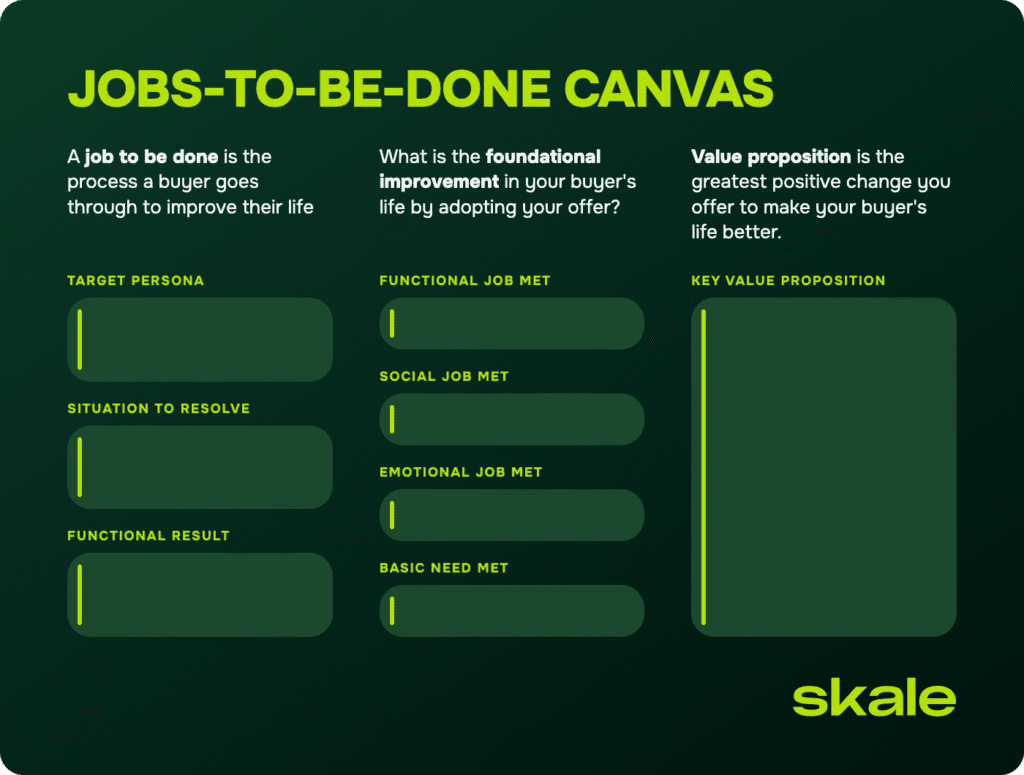
Once you’ve nailed who you’re targeting, the next step is figuring out why they’d even consider your product in the first place. This is where the Jobs to Be Done (JTBD) framework steps in.
JTBD exercises require you to shift your mindset from what your product does to what your customer is trying to achieve.
So instead of: “we sell project management software,” it’s: “we help fast-moving teams finally ditch messy spreadsheets and hit deadlines without breaking a sweat.” Big difference.
By focusing on the job, or the actual outcome your customer wants, you can uncover the real reasons people search for solutions like yours.
Understanding these use cases helps you reverse-engineer your SEO strategy. You’ll know what keywords to target, what content formats to prioritize and how to position your product.
And remember, you should have a holistic organic growth strategy. So you’d apply the same logic to your GEO search prompt research and targeting to craft a content strategy that succeeds across both traditional and AI search.
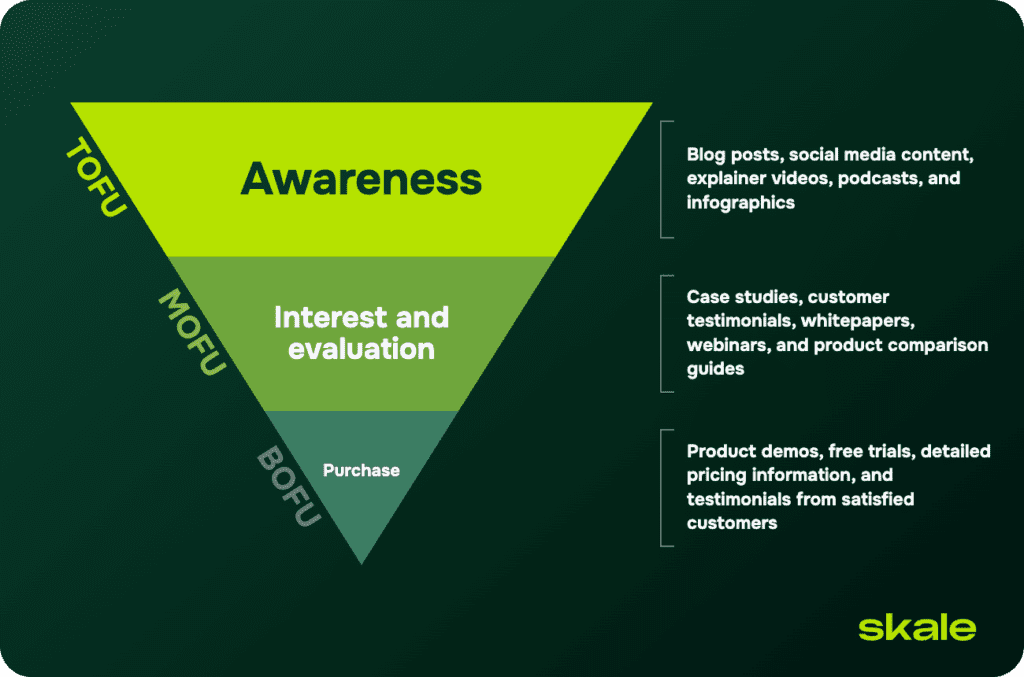
Now that you know who your customers are and what they want to achieve, it’s time to meet them where they are in their journey.
The customer awareness framework helps you figure out what to say and when to say it.
These potential customers don’t know they need help yet. Your job is to wake them up to their problem and your solution.
This is where educational, insight-driven content shines. Most of these guides answer a specific question, like this Zapier blog post on what customer segmentation is or this guide on app UX friction and what it reveals by Contentsquare.
They know something’s broken, but they’re not sure what the fix is. Content here should help them define the issue and recognize the stakes.
For example, this guide on 12 ways to stop customer churn by SuperOffice is valuable for a start-up that has a high level of churn and sets SuperOffice up as experts in this area.
They’re actively exploring options and need guidance. Comparison guides, pros and cons posts and “what to look for in a [product category]” content fits perfectly here.
A great example is this article by Zapier that compares Shopify and Squarespace to help a customer make a decision between the two.
You’re not pitching (yet), but you are setting the criteria and ideally shaping it in your favor.
They know your brand and might even be halfway to buying. This is where content gets sharper and more persuasive.
Case studies, customer testimonials, deep dives into features and pricing breakdowns can all help them pull the trigger.
Keyword research will form the basis of your SEO strategy and content roadmap. There are a number of ways you can approach this that go beyond researching keywords on Ahrefs or Semrush.
Before diving into keyword tools, ask: what is your ICP currently using to solve this problem, and what are they moving away from? These switch moments are where high-intent keyword opportunities live.
Switching from non-software: Some prospects are currently using spreadsheets or manual processes. Target searches like “[job to be done] Excel template” or “how to [X] without software” to meet them where they are and position your product as the natural upgrade.
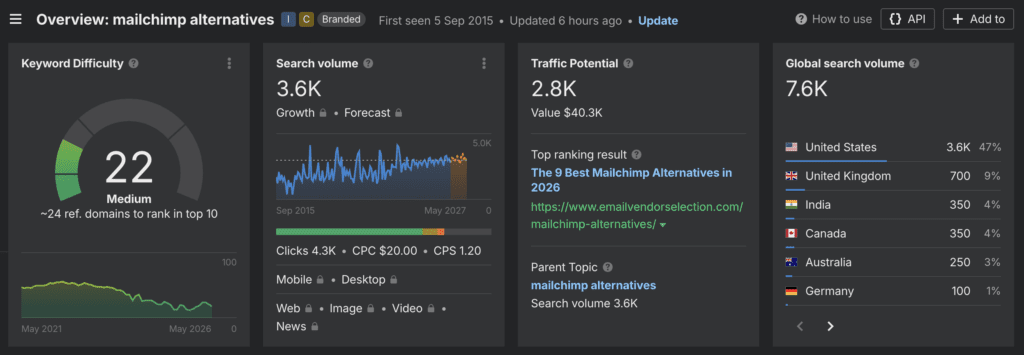
Switching from a competitor: Unhappy users search for alternatives. For example, “Mailchimp alternatives” gets 7,600 searches a month globally. Target these terms, and consider building a “[your brand] alternatives” page to intercept users who might be researching a switch away from you.
The best keyword ideas can come from the language your customers already use. Pull from:
The goal is to surface phrases that keyword tools won’t catch because they’re too specific or conversational to show volume, but loaded with real intent.
Paid keywords can reveal keywords your competitors really care about and what’s converting for them. Tools like Ahrefs make it easy to see which keywords they’re bidding on. Here’s how to do it:
Having a strong keyword list isn’t enough. To rank consistently, your content needs to work as a system.
That’s where content clusters come in. Instead of targeting keywords in isolation, build out full topic clusters.
Google rewards topical authority and favors sites that cover a subject comprehensively and in a structured way. That means creating a central pillar page for the main topic, supported by related articles that tackle subtopics, all linked together.
On Skale.so, you’ll find clearly defined hubs built around core topics we want to own, like:
➡️ SaaS SEO
➡️ SaaS marketing
➡️ B2B SEO
➡️ Demand generation
➡️ B2B content marketing
Each of these clusters helps Google see Skale as an authority in our niche and makes it easier for readers to explore related topics and move further down the funnel.
But in 2026, clusters need to go further than keyword coverage. When someone asks an AI system a question, it expands that prompt into multiple sub-questions; it’s a process called query fan-out.
To show up consistently across AI search engine answers as well as Google SERPs, your cluster needs to address every facet a buyer might explore:
As Skale’s Organic Growth Lead Kristina Pantelic puts it: “Traditional keyword research tells you what people search for. Query fan-out tells you how AI systems interpret and explain a topic.”
A structured SEO model helps you move from a list of keywords to a prioritized, revenue-linked content plan.
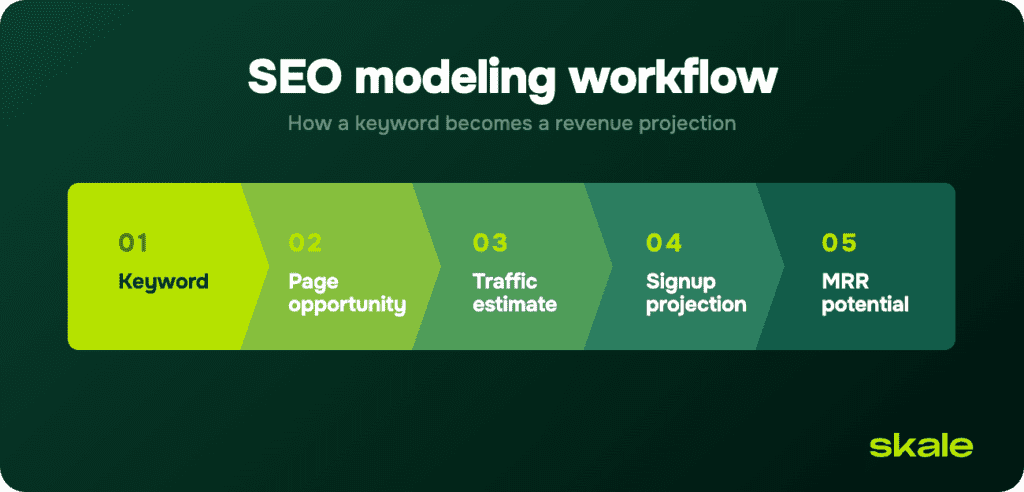
Start by listing all existing pages that currently drive SEO value. For each one, identify the head term, map its stage in the awareness funnel and ensure there’s no keyword cannibalization. Then, plan additional high-opportunity pages using keyword research.
Each row in your sheet should represent a page-level opportunity and include the following data points.
| Category | Field | Description |
|---|---|---|
| Page details | Page URL |
Existing URL, if the page is already live |
Page title |
The title or H1 of the page | |
Head keyword or topic |
Primary keyword the page targets | |
Awareness stage |
Funnel stage: problem-aware, solution-aware, product-aware, etc. | |
Topic cluster |
Group or theme the page belongs to | |
Search intent |
User intent: informational, navigational, commercial or transactional. | |
| Performance and SEO metrics | Current organic clicks (past 30 days) |
Click data from Google Search Console |
Traffic potential |
Estimated monthly search volume and CTR (e.g. from Ahrefs) | |
Current referring domains (RDs) |
Number of unique domains linking to the page | |
Estimated RDs needed to rank |
Benchmark based on SERP competitors | |
| Conversion and business impact | Visit → signup conversion rate (CVR) |
Based on page intent or historical data |
Signup → paying conversion rate (CVR) |
Conversion from free to paying user | |
Estimated signups per month |
Projected from traffic and CVR | |
Estimated customers per month |
Signups × signup → customer CVR | |
Monthly recurring revenue (MRR) potential |
Estimated customers × average MRR per customer |
One of the fastest ways to uncover high-impact SEO opportunities is by analyzing what’s already working for others in your SaaS niche.
The goal here is to learn what is working, adapt it to your own ICP and find gaps you can own, rather than copy what your competitors are doing.
Using tools like Ahrefs, SEMRush and even Google itself, you can reverse-engineer the strategies of both direct competitors and broader content leaders.
Start by defining three key types of competitors:
Next, dig into their content to understand what’s working for them:
Backlinks are still a big part of SEO, and understanding how others are earning them can spark ideas for your own strategy:
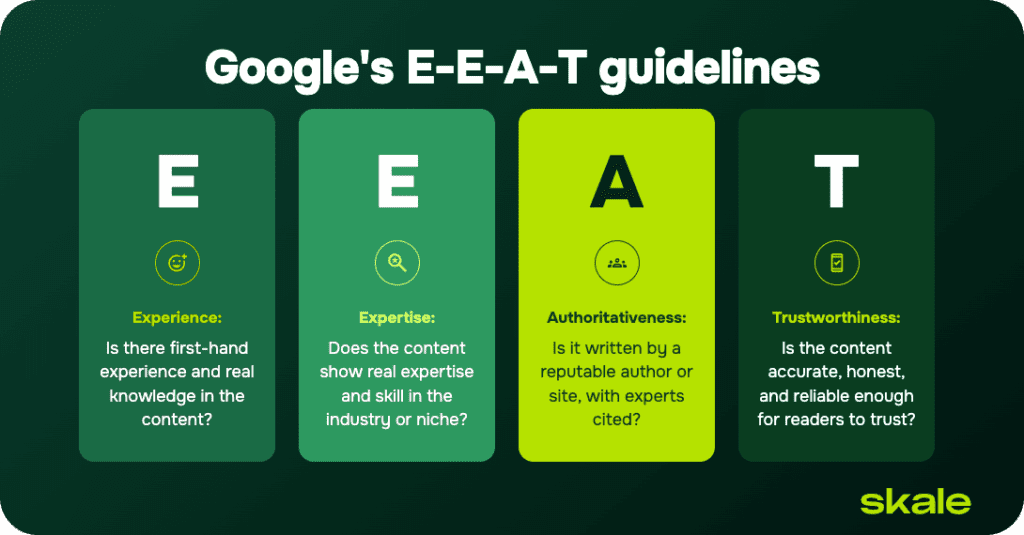
E-E-A-T stands for Experience, Expertise, Authoritativeness and Trustworthiness. It’s the framework Google uses to evaluate content quality and credibility. In 2026, it’s also part of what AI systems use to decide what’s safe to include and what sources to cite in its answers..
The last addition to Google’s E-E-A-T is the extra E, which stands for Experience. You build this by interviewing subject matter experts in your niche and working with SaaS-experienced content writers who understand the category deeply.
Trust signals are equally important: clear communication, customer testimonials, strong sourcing and transparent editorial standards all contribute. These signals matter to Google, LLMs and the people reading your page.
By focusing on E-E-A-T, you increase the likelihood of earning organic traffic, appearing in AI-generated answers, building credibility in your niche and driving conversions.
Some of the highest-impact SEO opportunities can actually come from small, strategic improvements to existing pages.
The goal here is to identify pages that already perform reasonably well but have the potential to deliver better results with minimal effort.
To do this, look for pages that are already ranking on page one or two, especially those sitting between positions 5–20. Once you’ve spotted them, focus on quick, high-leverage tweaks, like:
🏆Updating the title tag and meta description to improve click-through rate
🏆Refining keyword targeting and on-page relevance
🏆Refreshing outdated content or adding new internal links
🏆Adding recent, authoritative stats and expert quotes or advice
🏆Improving mobile experience, load speed, or addressing technical SEO issues
A few focused updates can be enough to lift these pages into better positions and start generating more organic traffic almost immediately. Also, these quick wins help build momentum and show early returns while your longer-term content strategy takes shape.
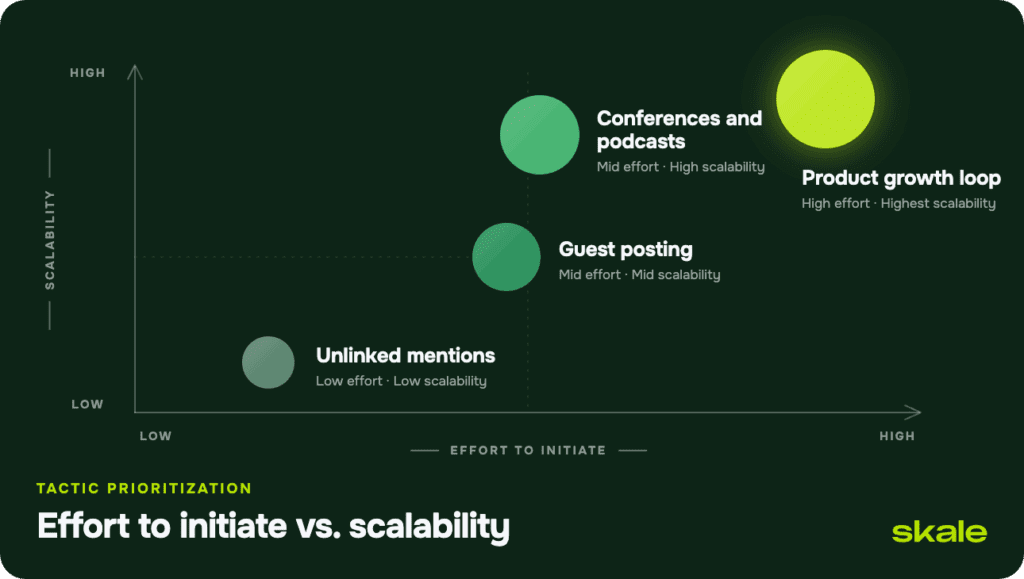
Without links, you can’t build a scalable SEO growth engine. The brands that treat link building as an always-on program rather than a one-off campaign see the biggest returns. We proved this by securing a €1 cost per signup for HappyScribe through strategic SaaS link building alone.
The core tactics worth running in parallel are:
But the most compounding approach is building link acquisition directly into your product or website.
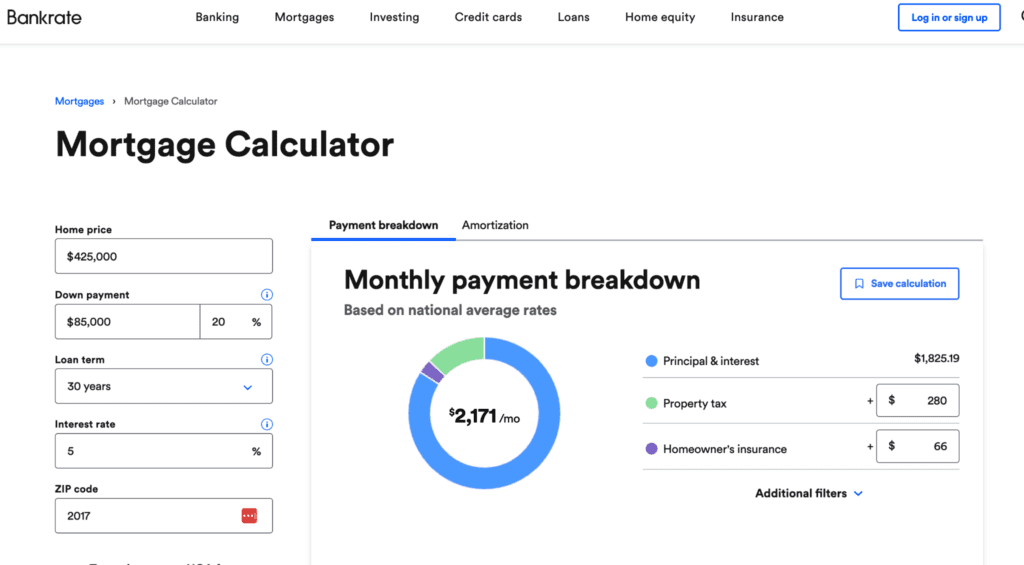
➡️Bankrate, for example, offers a mortgage calculator that helps users estimate their monthly payments.
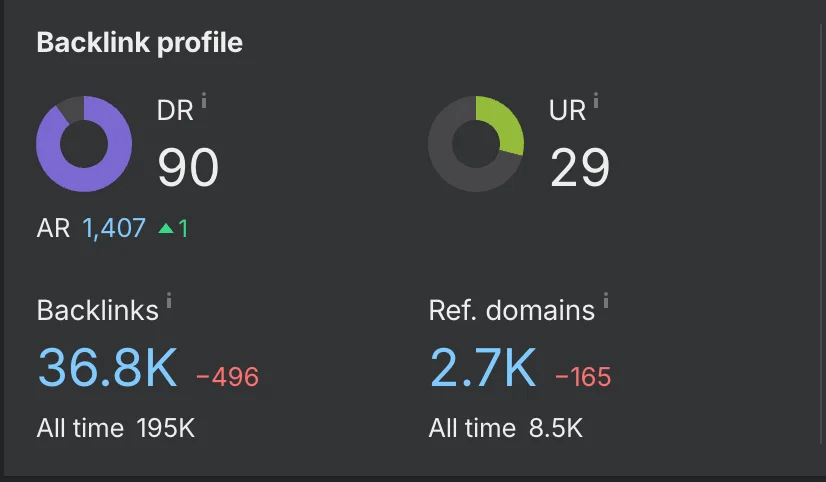
According to Ahrefs, the page has earned 36.8K backlinks from 2.7K referring domains, including links from Morgan Stanley, Yahoo Finance and Capital One.
Build links like your MRR depends on it
Great content needs great links. Learn how to build high-quality backlinks that drive traffic and revenue, not just domain rating.
See 21 SaaS link-building strategies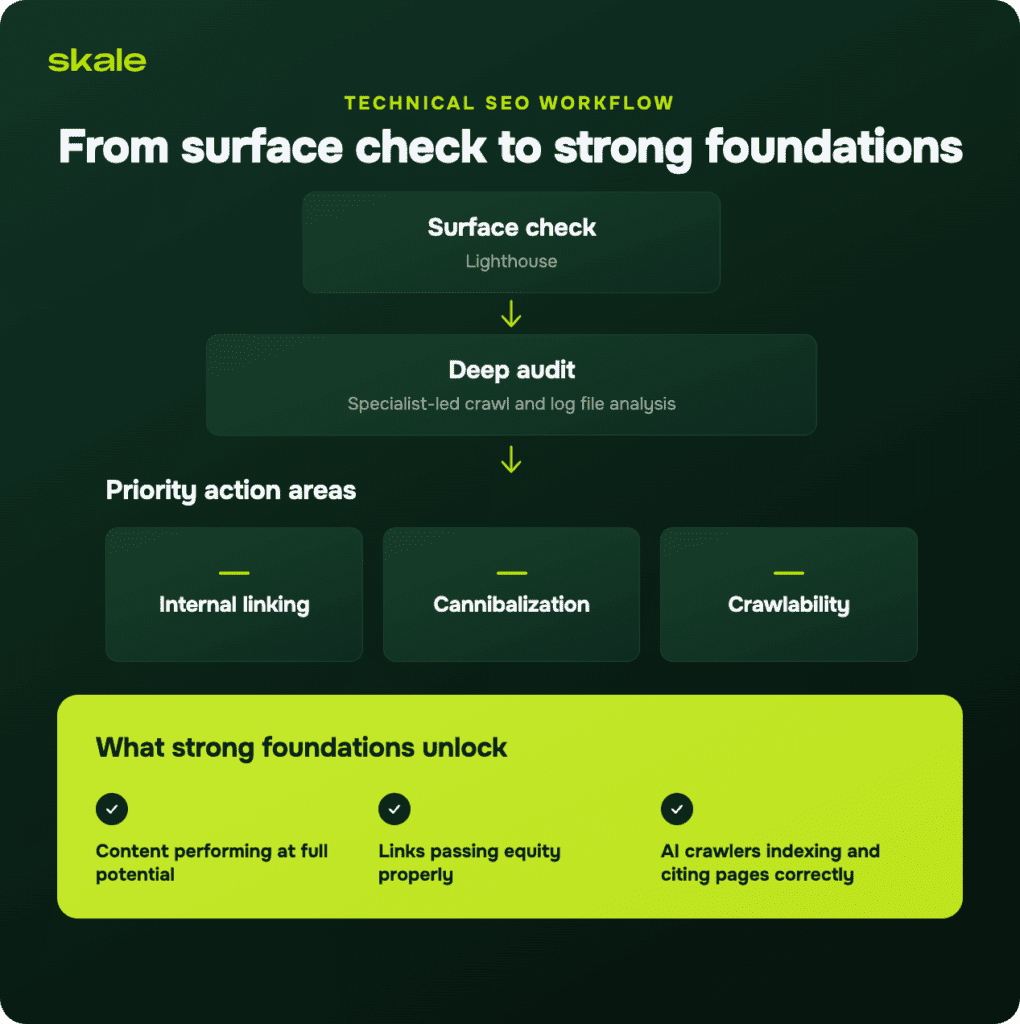
Even the best content and link building strategies will struggle if your technical foundations are weak. Slow load speeds, poor crawlability and broken internal linking quietly limit what SEO can deliver.
Start with a quick surface check using Google Lighthouse to flag obvious issues like page speed and mobile performance. Then go deeper with a proper technical audit using Ahrefs or Semrush. Or better yet, work with a technical SEO specialist who can use custom crawlers and log file analysis to find what tools miss.
From there, focus on three areas:
Your users are one of the most underrated content engines in SaaS. Done right, community-led growth scales organic visibility, deepens product adoption and strengthens SEO performance without proportionally increasing your content budget.
The idea is straightforward: build structures that make it easy and rewarding for users to contribute content, then let the loop run.
Figma is the clearest example of this working at scale. Its Figma Community lets users share templates, plugins, icons and full design systems. Each shared asset creates a new indexed page that targets long-tail design queries, drives traffic and deepens product engagement.
Contributors get visibility; Figma gets a self-sustaining content ecosystem that grows with its user base.

You don’t need Figma’s scale to make this work. A co-created template library, a community Q&A section, or an expert quote program can all generate content that builds topical authority and earns links organically.
The key is making contribution easy and giving users a reason to participate. Partner with your customer success team to identify the right approach and the right moment to make your move.💡
Sooner or later, your CFO or board will ask the big question: “What’s the return on our SEO investment?”
Measuring ROI properly lets you prove that SEO is driving pipeline, not just pageviews. And doing so means accounting for three things that make SaaS SEO different from other channels.
“SEO rankings settle over four to 12 weeks, and pipeline impact becomes measurable around 60 to 90 days. That’s what makes organic different from paid: you can’t evaluate it in the same month the work happens.
This means a snapshot view will always cut the story short. The accurate picture only emerges when you track how organic cohorts convert and expand over months.” — Kristina Pantelic, Organic Growth Lead at Skale
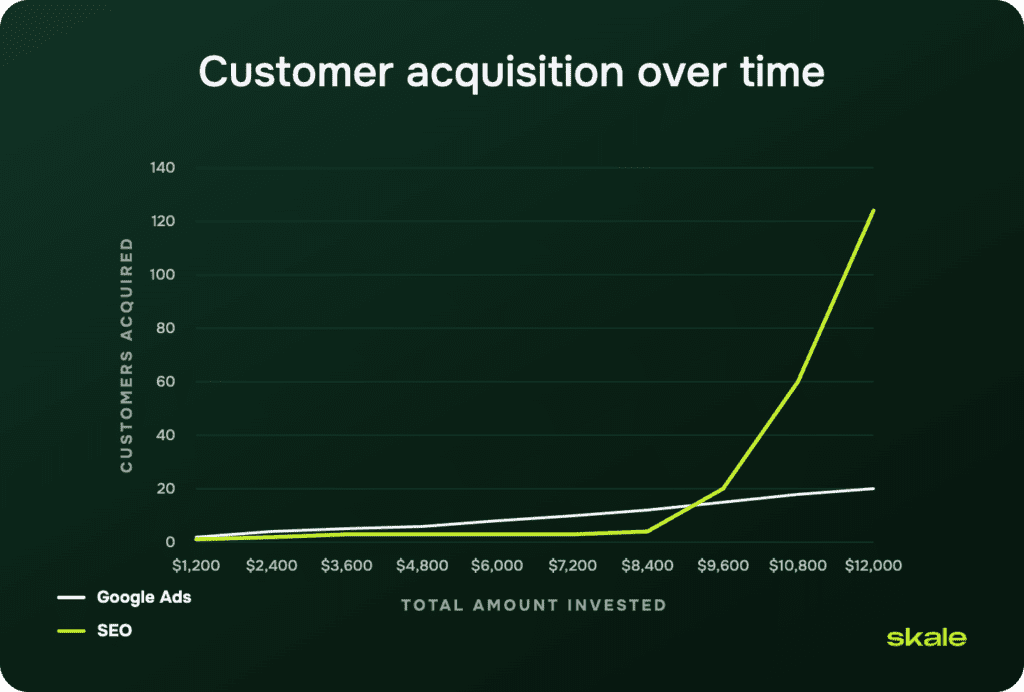
Taken together, these three factors mean SEO ROI is almost always underestimated when measured too early or too narrowly.
Track organic cohorts over time, tie them to pipeline and revenue rather than traffic and use the lag to set realistic expectations with stakeholders from the start.
Track the real ROI of your SaaS SEO efforts
Use our free tracker to connect SEO metrics to revenue. No more guesswork, just clear, defensible results.
Get the SEO ROI trackerThe 14 steps in this guide are meant to work as a system. Get the foundation right and your content has direction. Build the engine and your site becomes a customer acquisition channel. Add fuel and the channel starts feeding itself.
In the AI search era, that system also needs to show up beyond Google, from the AI-generated answers buyers read before they click, through to the comparison content they assess before they make their shortlist.
None of this happens overnight. But done consistently, organic search becomes one of the few channels that keeps delivering value long after the work is done. And the content you created or links you built a year ago can continue compounding into pipeline and MRR well into the future.
If you want to build a system that starts driving business results faster, work with a specialist SaaS SEO agency and turn organic search into one of your highest-performing acquisition channels.
There are several key SaaS SEO metrics you can track to stay on top of your KPIs.
The top four are revenue (for overall performance), organic ROI (for measuring returns), visibility and search engine rankings (for measuring keyword strategy effectiveness) and conversions (for measuring strengths and weaknesses).
For most SaaS businesses, SEO is one of the few acquisition channels that gets more valuable over time. Unlike paid, it doesn’t stop the moment budgets get cut.
It builds compounding visibility across the full buyer journey, from early problem awareness through to final decision. And in 2026, strong organic presence increasingly determines whether you show up in AI-generated answers too.
Content marketing is a great way to build a connection with users, even before they officially sign up to use your product.
SEO content is simply content that is optimized to connect with the right audience in the right way. By answering FAQs and providing users with informative posts related to your product offering, you can build brand awareness and showcase your product at various points in the customer journey.
To save time creating a SaaS SEO strategy, consider working with a specialized SaaS SEO agency like Skale that can provide predictable results and industry-specific knowledge.
Specialist agencies can help streamline your SaaS SEO roadmap by leveraging their experience in optimizing SaaS websites and understanding the specific challenges and opportunities in the SaaS market.
SaaS SEO is the process of turning your website into a powerful, scalable customer acquisition machine.
A strong SaaS SEO strategy blends techniques like jobs-to-be-done (JTBD) frameworks and analyzing switch moments to match your content with what users need, exactly when they need it.
Depending on where someone is in the funnel, your content needs to do very different jobs:
• Top of funnel (awareness): At this stage, users are just starting their research. Blog articles, how-to guides, infographics and educational articles work best to capture attention and inform.
• Middle of funnel (consideration): Now users are weighing their options. Landing pages, webinars and product videos help show why your solution is the right fit.
• Bottom of funnel (decision): Here’s where users are ready to take action, but they might still need a final push. Case studies, product demos and free trial offers help remove any doubts and close the deal.
SaaS SEO isn’t your standard “just target keywords and blog forever” play. It’s a more strategic and long-term approach that’s built around how SaaS companies actually grow.
Here’s what makes it different:
1. Your go-to-market motion shapes everything. SaaS businesses usually follow one of three GTM strategies: self-serve, SMB, or enterprise. Your SEO strategy needs to align with whichever motion you prioritize. Otherwise, you end up with a confusing, scattered content strategy and unclear metrics for success.
2. The sales cycle is longer and more complex: Unlike e-Commerce, where someone might convert after landing on a product page, SaaS buyers typically go through multiple stages before committing. Your SEO strategy has to support that full journey. That includes content for early discovery, mid-funnel consideration and bottom-of-funnel decision-making.
3. There’s a broader top-of-funnel opportunity: SaaS companies can build awareness earlier in the buying process by creating content around customer pain points and jobs to be done. You’re not just targeting “buy now” searches. You’re building a relationship with potential users long before they’re ready to convert.
4. It’s tied closely to jobs to be done (JTBD): People don’t use SaaS tools for the sake of it. They’re hiring your product to do a job. Mapping your content strategy to these use cases helps you attract users who are more likely to stick around, spend more and churn less. It also helps you prioritize content that supports product-market fit and revenue growth.
5. Switching plays a big role in buying decisions: Most SaaS users are switching from something else. That could be another SaaS product or even a non-digital solution like spreadsheets or manual processes. Good SaaS SEO content speaks to those switch moments and helps users understand why your product is the better choice.
Effective SaaS SEO starts with GTM alignment. Knowing whether you’re targeting self-serve, SMB, or enterprise buyers shapes everything from keyword strategy to content format.
From there, companies build topical content clusters mapped to the full buyer journey, earn authority through strategic link building and maintain strong technical foundations.
In 2026, SaaS companies must also optimize for AI search visibility alongside traditional rankings, and treat SEO and GEO as one connected organic growth system.
A good strategy starts with commercial clarity: who you’re targeting, what job they need your product to do and which switch moments bring them to market.
From there, SaaS SEO best practices include building content clusters that cover the full evaluation journey, modeling expected impact at the MRR level and treating link building and other off-page tactics as an always-on program.
The best strategies compound over time and are built to drive pipeline, not just traffic.
Yes. For most SaaS companies, SEO is one of the highest-ROI acquisition channels available. Unlike PPC, SEO compounds over time and delivers value long after the initial investment.
In the AI search era, good SEO also feeds GEO visibility, which means these returns extend beyond Google into ChatGPT, Claude, Perplexity and beyond.

Learn more about
SaaS SEO
The SaaS link building guide: 21 strategies and examples for 2026
Looking to get started with link building? Grab a coffee and enjoy this complete SEO link building for SaaS guide + free checklist.
Read More
Enterprise SaaS SEO Strategy: A Guide to Acquiring Organic SQLs for SaaS Companies
Unlock the power of Enterprise SaaS SEO with tried-and-tested strategies from the experts & explore SEO tactics for SaaS enterprises.
Read More
Guide to SEO for SaaS Startups: How to Drive MRR at Every Level of Funding
Discover how to drive MRR with SEO for SaaS startups, and how your B2B SEO strategy should evolve for different levels of business funding.
Read More