





How to build a SaaS SEO system that compounds revenue growth in 2026
We've transformed SEO to be a top-performing customer acquisition channel for so many SaaS, and there's no stopping you from doing the same.
Read More


SaaS link building is the process of earning backlinks from third-party websites to grow your organic authority and rankings. In 2026, those backlinks are doing something else too; they’re boosting your chances of getting mentioned in AI answers.
When AI search engines answer your buyers’ questions, they don’t just look at who ranks #1. They analyze which brands show up most often across the sources they trust: listicles, third-party guest posts, podcast notes, Reddit threads, etc.
So link building is no longer just an SEO play. It’s also part of how you build brand presence across the sources AI systems pull from when they form answers.
If you’re not sure where to start, here are 21 tactics you can use to build links in 2026 and beyond. Enjoy!
We’re here to talk you through the link building SaaS companies use, as well as some alternative ways to acquire do-follow links, inbound links and higher levels of organic traffic to your most vital target pages.
Good content is the foundation of link building. If you’re asking someone to link to a generic blog post that says the same thing as every other article in the SERP, you’re making the job harder than it needs to be.
For tech companies, high-quality content means original research, benchmark data, templates, free tools, expert insight or thought leadership that shows your expertise on a topic.
That’s what gives people a reason to link to your content. A journalist can cite your data. A blogger can link to your framework. A partner can share your template with their audience. And over time, those links help build the kind of authority that improves rankings and supports your wider visibility across search (and AI-assisted discovery). That’s why strong SEO content writing is such an important part of any SaaS link building strategy: the better the asset, the easier it is to earn links to it.
Finding unlinked mentions of your brand is one of the simplest link building methods available to you. When a website references your brand without linking to it, that’s a quick win waiting to happen.
Set up a Google News alert to track who’s writing about you, then check whether they included a link. If they didn’t, you have an opening.
Here’s an example. Skale is mentioned in an article, but the author didn’t include a link:
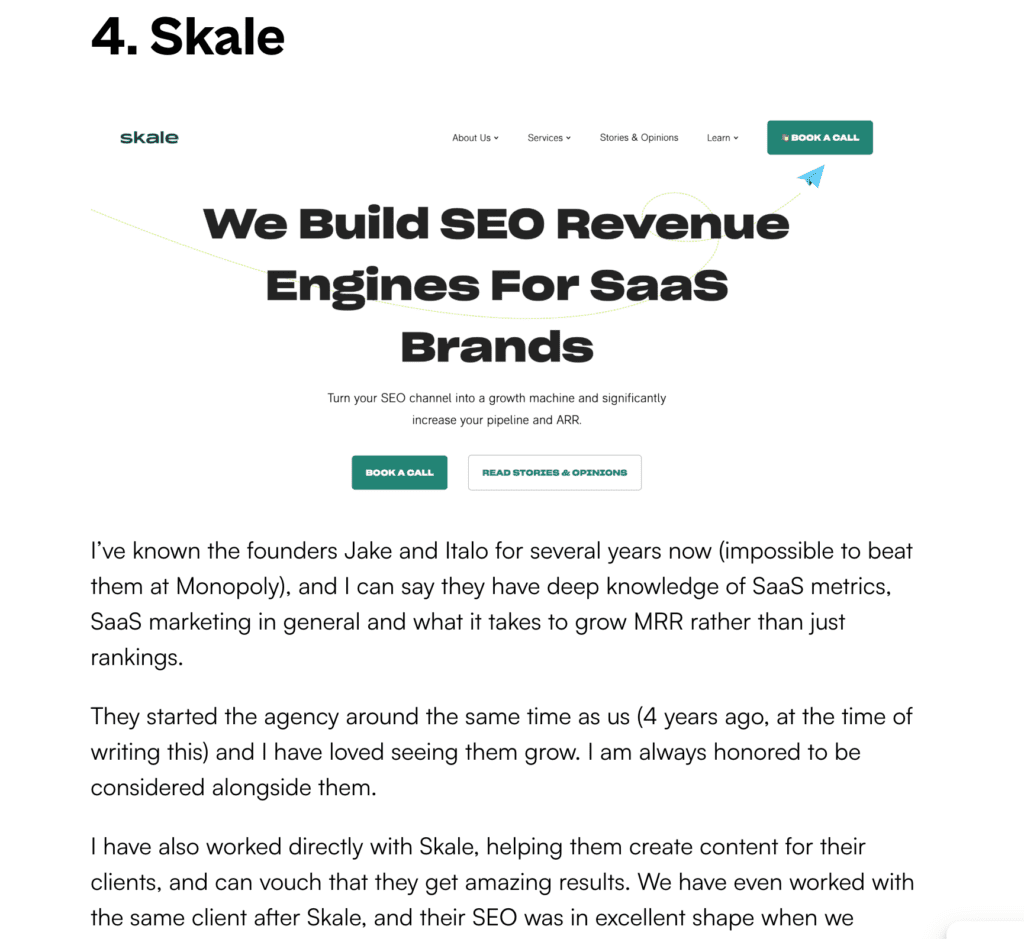
That kind of opportunity is exactly what unlinked mention outreach is for. For example, Skale was featured in a roundup of the best AI SEO agencies, but the original mention didn’t include a link. After reaching out, we were able to turn that unlinked brand mention into a backlink and secure one additional link from the same site.
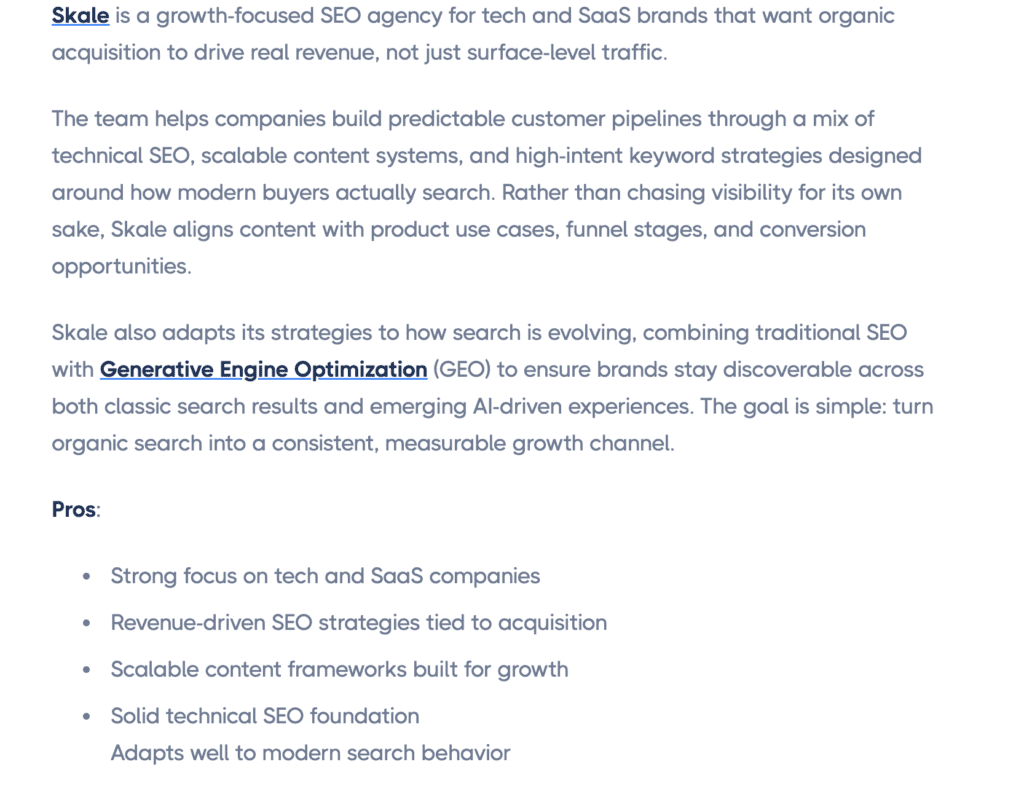
The fix is simple. Find the author or editor’s contact details, send a short email or LinkedIn message and politely ask whether they’d be happy to add a link back to your website.
Not all existing links are working as hard as they could. If a website has linked to your homepage, reach out and ask them to update it to a more relevant page on your website so you can capitalize on higher-quality referral traffic.
When I worked at Typeform, we did exactly this. By asking referring sites to link to our survey maker page instead of the homepage (as well as a number of other tactics), we were able to rank above both Wikipedia and SurveyMonkey in the SERPs.
Guest posting is a staple in most SaaS link building strategies. The approach is straightforward. You (or a link building partner) build relationships with high-authority sites in your niche and pitch them free, high-quality content.
Once they’ve agreed on a topic, your writers produce the piece and naturally include a link to the page you want to strengthen.
For example, we secured a guest post for one of our clients in the motion design SaaS space on the best motion design tools every designer should try:
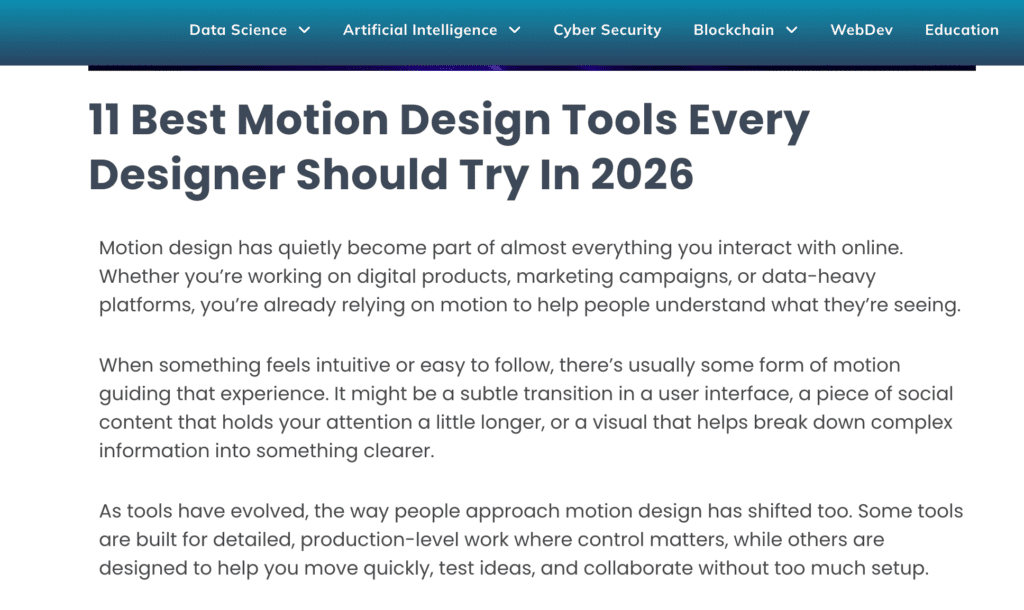
The article naturally included the client as a relevant option in the category and linked back to its website.That’s what good guest posting should do: place your brand in a context where it genuinely belongs, on a site your audience is likely to trust.
Guest posting consistently will help you build topical authority in your niche over time. So don’t treat it like a one off project. Take the time and cultivate long-term relationships with site owners in your niche.
The main drawback of this strategy is time. Link prospecting is time-consuming and involves a lot of back-and-forth. This is why many tech brands partner with an agency that already has established relationships in their niche.
While this might sound like a lot of effort, this pays for itself in domain authority and organic traffic to your site over time.
Bonus: Read about Enterprise SaaS SEO Strategies.
One of Sprout Social’s most-linked blog posts is “7 social media trends you need to know in 2026.”
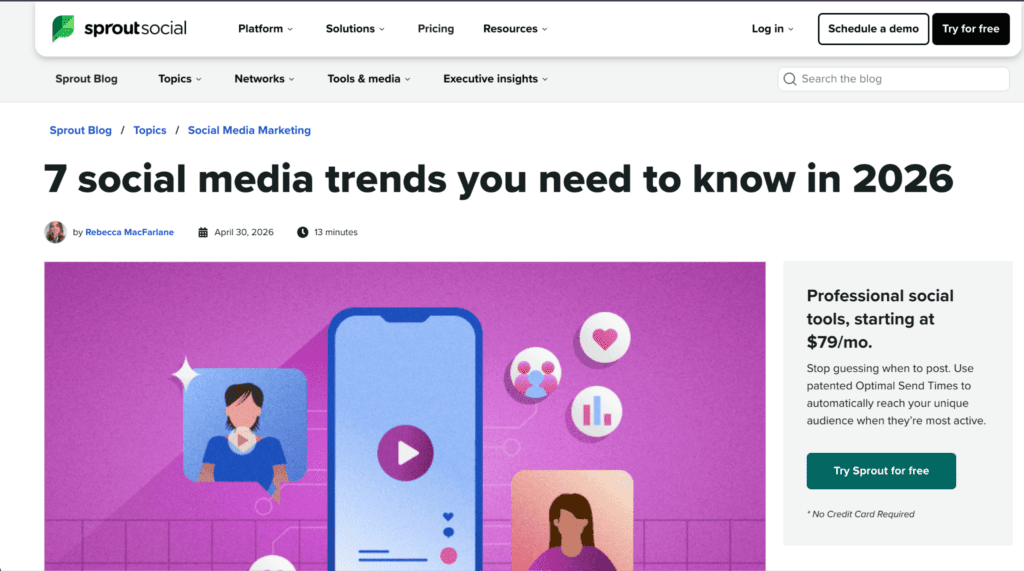
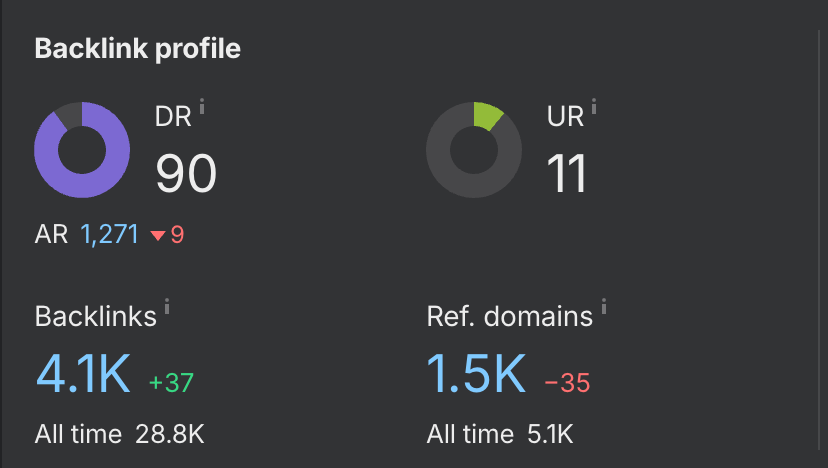
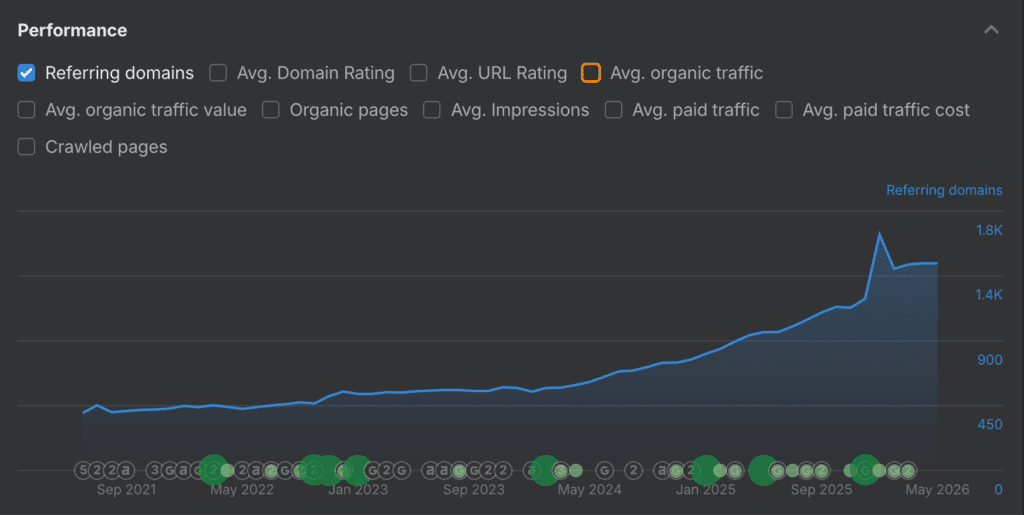
How did they manage to rack up 1.5k referring domains? Did all of this come from building relationships with authoritative websites? Not entirely.
Creating high quality content like trend reports like this one can be an excellent way to side-step the more costly methods of building links. By creating content with search engine optimization in mind, Sprout Social has created a massive backlink profile for this page. So, how did they do it?
First, they built high-barrier-to-entry content. The report draws on fresh proprietary data from a survey of 1,200 marketing leaders, which is not something a competitor can easily replicate.
Second, they made this SaaS content very shareable by including custom infographics, standalone stats and expert insights from marketing leaders throughout.
Third, they update the same URL every year with fresh data. This compounds over time. The same page accumulates more referring domains with each new edition, which drives stronger rankings year on year. The referral traffic alone speaks for itself.
Source
What trend report can your SaaS brand be known for year over year?
Podcasts are not only a great way to build awareness with your ICP, they’re also an underrated link building tactic.
Here’s how it works: Most podcasts have a website and when an episode goes live, the host will publish a write-up that includes links to the guests and resources mentioned. If you’re a guest, your website will be included.Here’s an example of Typeform earning a link after their co-founder was interviewed on the SaaS club podcast.

The advantage over guest posting is that there’s no written content to produce. You prepare, show up and speak for 30–45 minutes on a topic you already know well.
Product embed links are created when your users embed parts of your product on their website.
For example, at Typeform when people embedded a contact form, they also included a link back to Typeform’s contact form maker page, which in turn boosted its rankings.

Find a way to make your product embeddable and get your users to embed it on their website and include a “Powered By” link back to a relevant page on your website.
This tactic is also called “widget link building.”
Some of the best link building happens when your users do it for you.
If your product lets users create something — a prototype, a report, a form, a chart — users will naturally want to share it.
InVision is a great example of this. By making it easy for users to share prototypes created on the platform, they turned their user base into an organic source of backlinks from high-authority sites across the web.
Here’s an example posted on Adobe’s website. See how the “Prototype Experience” button links back to InVision?

The mechanic is simple. Make parts of your product easily shareable, then educate your users on how to do this via email marketing, in-app prompts and blog content. The more your users publish, the more your link profile grows.
If you run an analytics SaaS, for example, making your in-product reports shareable with a single click could be enough to get this flywheel moving.
Listicles are pages like “best tools for X,” “top software for Y” or “best alternatives to Z.” Getting included in relevant listicles and tool roundups can help SaaS companies earn backlinks from pages that already have topical authority.
For example, we secured a placement for one of our clients, a transcription tool, in a roundup of the best transcription tools. The placement makes sense because the SaaS tool genuinely belongs in that category, and the article reaches readers who are already comparing transcription software:

These pages also get updated over time. New tools are added, outdated products are removed and editors often refresh the list when there’s a good reason to improve it.
But relevance is everything. As Stevan Milanković, Head of Off-Page at Skale, explains:
“The best placements are the ones where your product genuinely belongs: where adding your brand makes the article more useful for the reader.”
Being hyper-relevant also makes the outreach pitch easier. When you can tell a website owner that their list is missing a use case and that your product fills that gap, you’re improving their content, not asking for a favor.”
This now matters beyond traditional SEO. AI search engines look for third-party confirmation before they recommend a brand. So when your product is included in relevant listicles, comparison pages and tool roundups, it helps reinforce that your brand belongs in the category and is a credible option for that use case.
That’s exactly what we focus on at Skale with AI citation inclusion. We don’t chase random placements. We look at the sources AI tools already trust for the prompts your buyers are asking. Then. we get you included in that source.
Broken link building is a tactic where you find broken links on websites in your target niche and suggest your own content as a replacement.
For example, I checked Sprout Social’s broken backlinks in Ahrefs and found a dead link pointing to an old article about FOMO marketing:
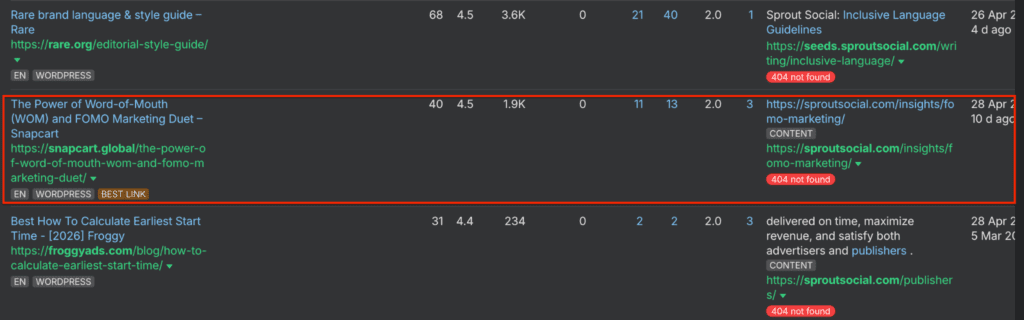
If you had a relevant piece of content on the same topic, you could contact the website owner, flag the broken link and suggest your article as a useful replacement.
This strategy is a win-win because you’re helping the site owner fix a poor user experience while earning a relevant backlink for your own site. The downside is that it can be time-consuming, especially if you need to create new content from scratch before you can pitch a replacement.
Download the free Saas link building guide
Beat the competition by gaining high-quality niche-specific backlinks
Grab our free link building bookInterview link building works similarly to podcast link building. The difference is that instead of appearing on a show, you’re pitching your CEO (or another internal expert) as an interview subject for blogs and publications in your niche.
Start by building a prospect list of websites that have previously interviewed SaaS founders or executives, then reach out to see if they’d be interested in featuring yours.
Here’s an example of an interview I did for Voucherify:

It wasn’t live; they sent me a list of questions in a Google Doc and I spent an hour answering them before sending them back to be published in a blog post interview format. In return, I got a link back to my homepage.
Many websites in your niche will be open to this, especially if you can offer a genuine expert perspective. And compared to producing a full guest post, the time investment is relatively light.
This LinkedIn message landed in my inbox, from someone at another SaaS company. They offered me a free infographic for one of my blog posts:

They didn’t explicitly frame it as a link building campaign, but the premise was clear: we’ll help you, if you can help us.
This is a powerful link building tactic because you’re leading with something genuinely useful, a high-quality visual asset that improves someone else’s article, and asking for something relatively simple in return: a link.
Here’s an example of how they secured a link on Constant Contact:

Are there articles on websites in your niche that would include an infographic and mention you in return?
An interesting SaaS link building tactic is to see who has used one of your website images and ask them for photo credit in the form of the link.
This is an email I personally received:
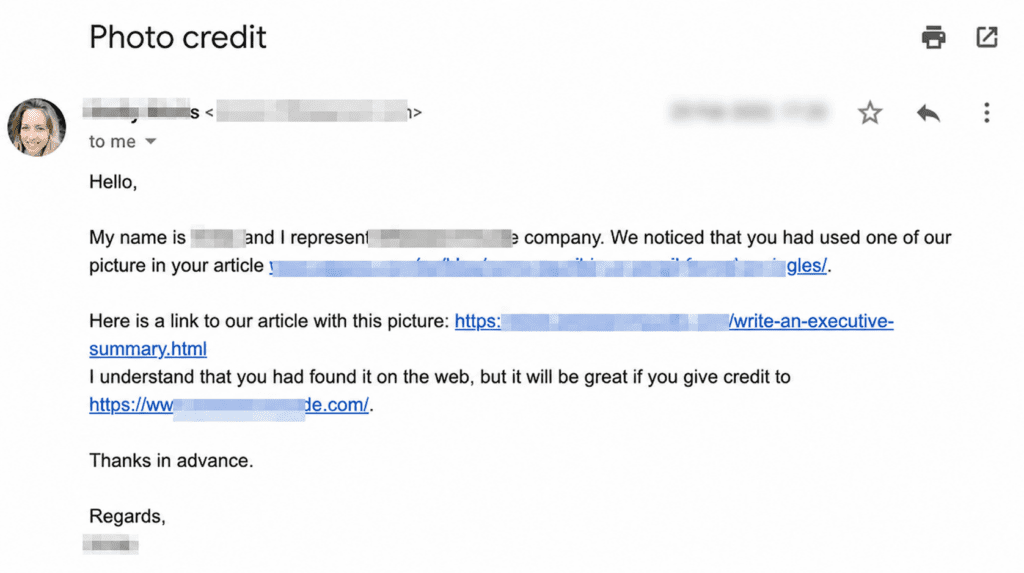
By using this tactic, they were able to acquire 44 links back to their website from high-authority brands such as Taboola and Springboard:

How many people should be crediting images that they used from your website? This can be a simple way to build homepage links, as well as links to feature pages where these kinds of images are usually visible.
This tactic is a gift that keeps on giving. Honest reviews earn you backlinks, build social proof and can put your product in front of an in-market audience that’s actively evaluating tools.
Product review link building involves reaching out to bloggers in your niche and giving them 3 months of your product for free, in exchange for a review write up on their website within 2 weeks of gaining access to your SaaS tool.
People love free things. And who knows, maybe they’ll love it so much they become a paying customer.
Also, in 2026, it’s also worth prioritizing YouTube. Instead of a written review, a relevant channel could review your product, compare it to others in the market or create tutorials that naturally feature your product. You’ll earn a backlink in the video description, which is a very strong quality signal for Google.
A big bonus here is that YouTube videos like this are also being cited by AI search engines more and more. And being in the sources that AI cites gives your brand a better chance of appearing in AI-generated answers, when your buyers are busy considering their options.
For example, I searched for the best AI SEO tools and this video was featured in the AIO:

An integration partner is another SaaS company with a product that connects with yours. Think CRM tools, analytics platforms, communication software etc.
These partnerships are primarily a GTM strategy for driving product adoption and MRR, but they’re also an underutilized source of backlinks.
Here’s why: when two products integrate, both parties have an incentive to promote it. That typically means a dedicated integration page, a co-marketing blog post or a listing in an app marketplace, all of which usually include a link back to the partner’s website.
One of our clients, Fleetio, is a good example. Their integration marketplace lists all of their partner tools, each with its own dedicated page linking back to the partner’s site.
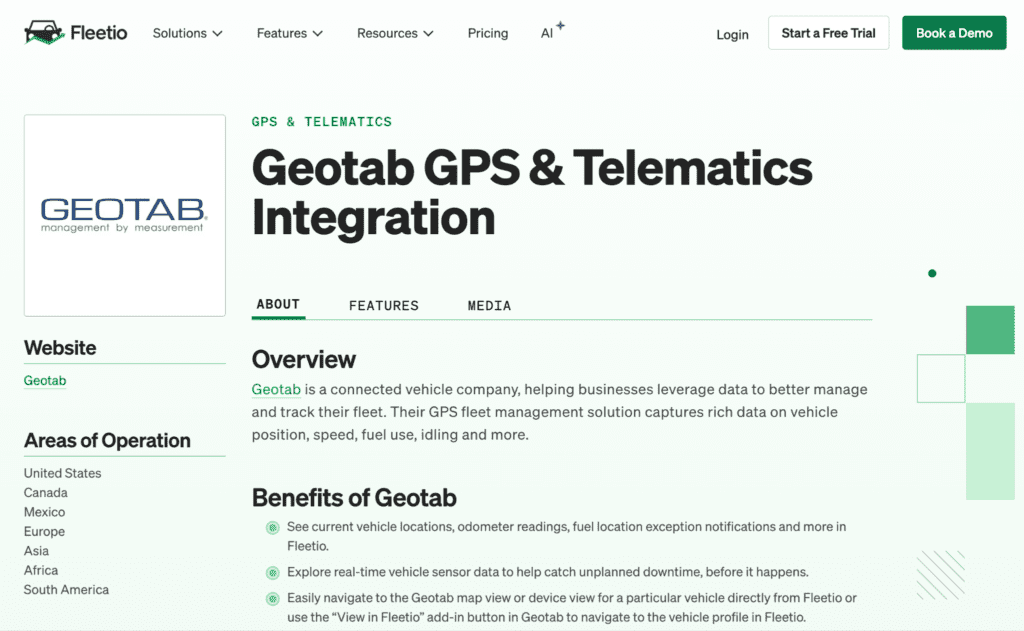
So, if you have integration partners that aren’t currently linking back to you or have integration pages that are thin or outdated, you have a great opportunity.
And if you haven’t yet explored guest posting on a partner’s blog around your shared integration, that’s another opening worth pursuing.
How many of your existing integration partners aren’t linking back to you yet?
Badges are an underutilized link building tactic that can generate a high volume of referring domains with relatively little effort.
The idea is straightforward: You create a badge that recognizes or rewards your users in some way, they display it on their website and in doing so, link back to you.
The most well-known example is G2. Every quarter, they publish rankings across hundreds of software categories and award badges to top performers.
Brands are proud to display them; they’re a form of social proof that helps boost conversions, and each badge links back to the brand’s G2 profile.
G2’s Customer Success Managers are also trained to push accounts to display the badge and include the link, so this isn’t accidental. It’s a deliberate link building program.
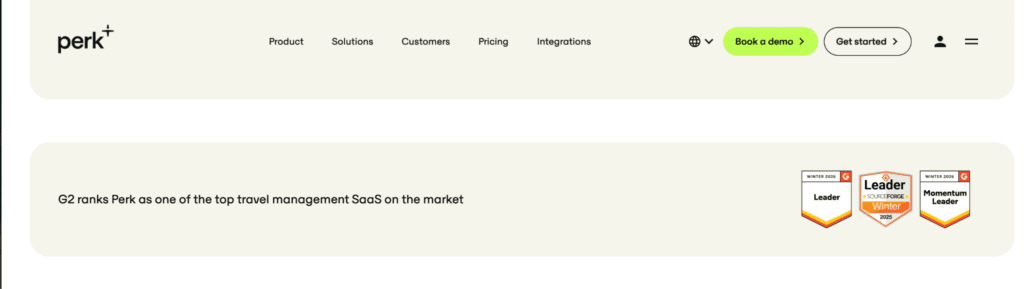
Here’s Perk’s (previously TravelPerk) homepage as an example. See how they display multiple G2 badges and link back to their G2 profile?
You can also take a more direct approach and incentivize badge placement. Mixpanel gives users extra product usage in exchange for adding their badge to the website footer and they run periodic checks to detect when it’s been removed.

Both approaches work. The key is giving users a genuine reason to display the badge, whether that’s recognition, social proof or a product benefit they don’t want to lose.
What badge could your SaaS offer that users would be proud to put on their website?
If you’ve got the development bandwidth, free tools can be a great way to earn backlinks.
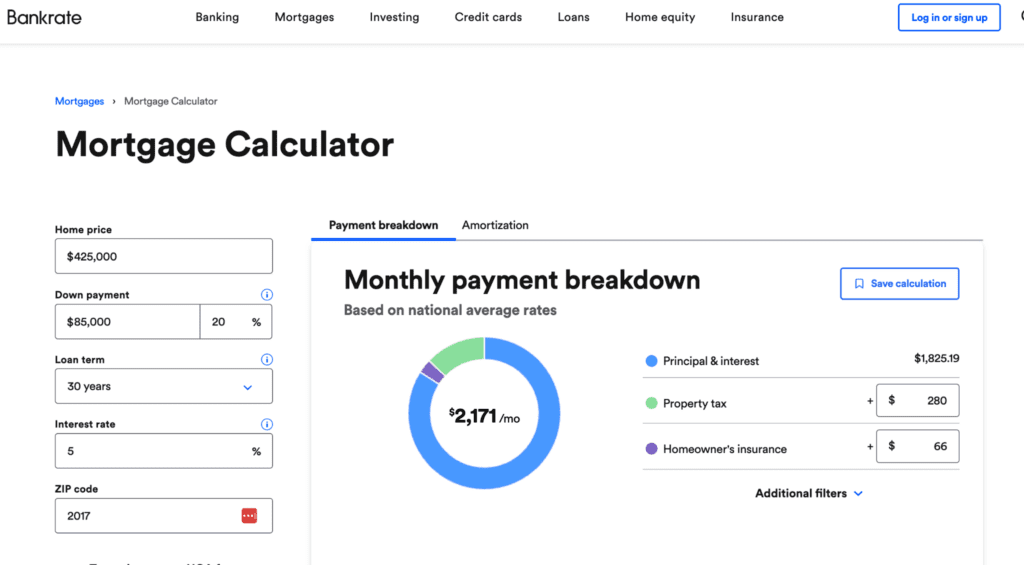
Build something genuinely useful for your ICP. Think calculators, checkers or templates that help your audience solve a specific problem quickly. If the tool is useful enough, people will naturally link it. Bankrate’s mortgage calculator is a great example. It helps users estimate their monthly mortgage payments.
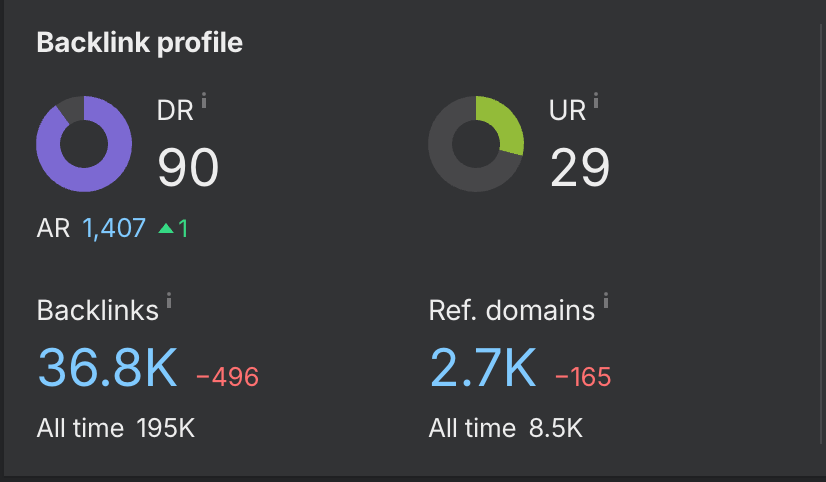
According to Ahrefs, the page has earned 36.8K backlinks from 2.7K referring domains, including links from Morgan Stanley, Yahoo Finance and Capital One.
The catch is that free tools don’t earn links just because they exist. You still need to promote them through relevant communities, partner content, newsletters and outreach.
But when the tool solves a real problem, it becomes much easier to pitch because you’re sharing something genuinely useful, not just asking for a backlink.
So, what free SaaS marketing tools are you building?
Giving testimonials is an easy way to get links back to your brand. While many platforms will only give you nofollow links, it’s still worth it considering all of the products you’ve used recently.
Then, reach out to them and let them know you’ll be willing to give a quick text testimonial in exchange for a link back to your website’s homepage.
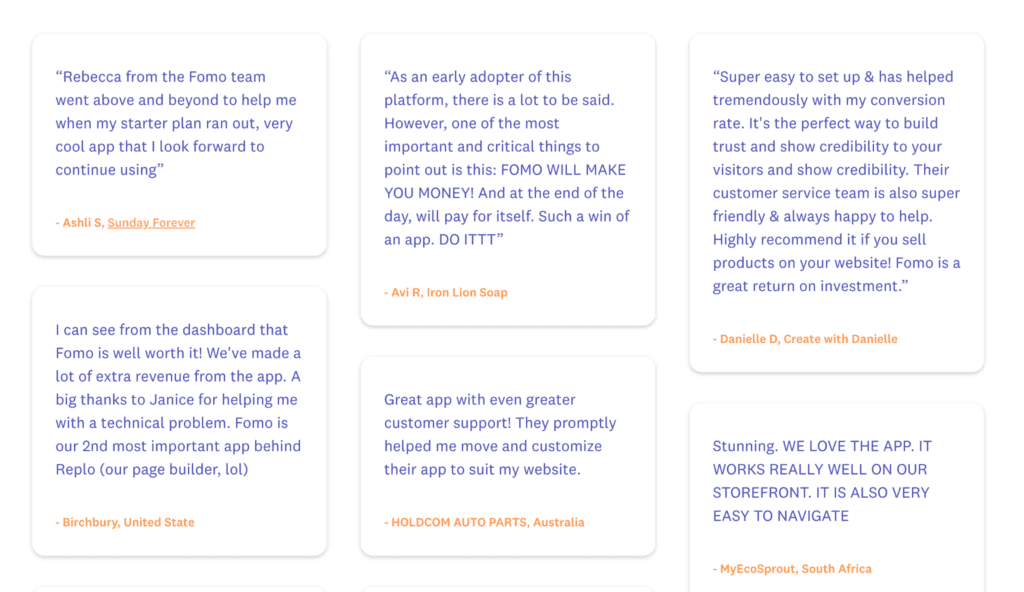
For example, by giving a small review of Fomo’s software, you also get a link back to your website:
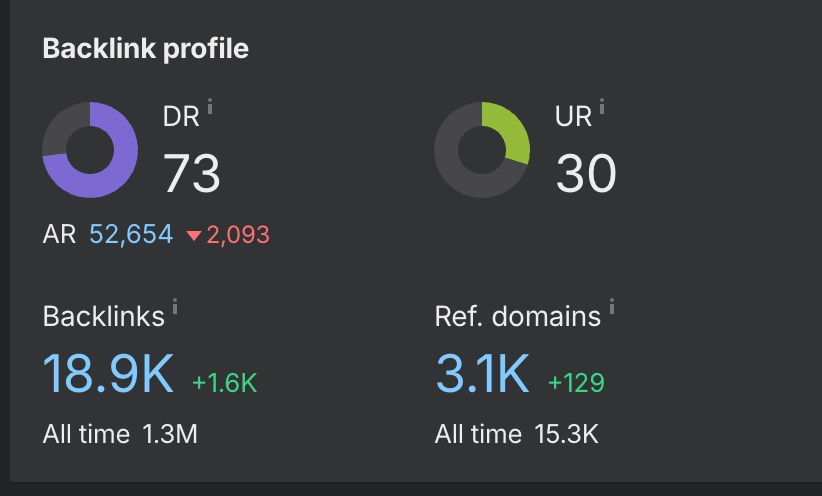
And Fomo’s stats aren’t to be frowned upon:
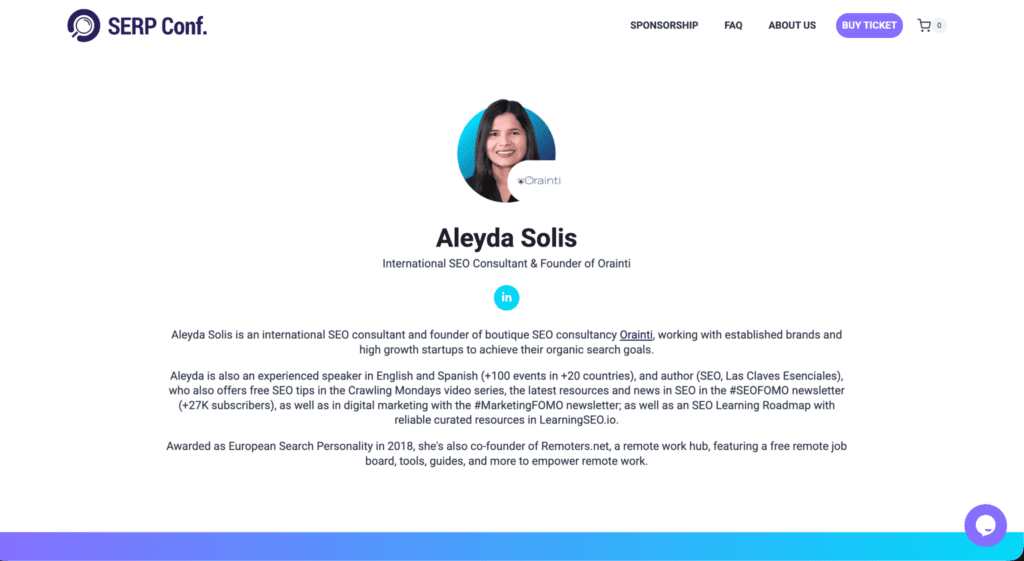
Speaking at and having your own conferences isn’t just a great way to build thought leadership, it’s also a way to acquire high quality links.
For example, Aleyda Solis is a speaker at SERP conf in Rome this year. In her author bio there is a link to her company’s homepage:
Scratch your prospect’s itch by solving their problems on Q&A sites such as Quora and Yahoo! Answers and the OG, Reddit.
For example, Smartlook was able to get a link by answering the question, “Does anyone know of an alternative to ClickTale?”

And not only were they able to get a link, they were also able to generate traffic and thus signups from an in-market audience looking to switch from a competitor tool.
Answering relevant Q&A threads can also support AI visibility. Community-led platforms like Reddit are increasingly influential in how buyers compare tools, validate options and discover recommendations. Showing up in these conversations can help reinforce your brand’s presence in the sources AI systems may use when generating answers.
What questions does your ICP ask on Q&A sites? How can you help them?
If Reddit is one of the places your buyers ask those questions, check out our guide to Reddit marketing for SaaS brands to learn how to build visibility in the right communities.
Your team has expertise. Other websites need expert insight. That’s an opportunity.
For tech brands, this could mean contributing to articles where your team has genuine experience, whether that’s SEO, demand generation, product marketing, customer success or another area you know well.
Platforms like Featured and Help a B2B Writer make this easier by connecting publishers with expert sources. A writer submits a request for quotes, experts respond with their insight and, if selected, they’re credited in the published article. That credit will often include a link back to the expert’s profile, company website or both.For example, here’s is how we attributed an expert’s contribution from one of our guides on SaaS marketing strategies:
It’s a win-win: the expert gets visibility and a backlink. The article gets stronger because it includes insight from people actually doing the work.
Just make sure your contribution is useful. Don’t send vague commentary that could have come from anyone. Share a specific opinion, example or lesson learned from experience. That’s what gives the writer something worth including and gives you a better chance of earning the feature.
There isn’t one “best” link building strategy for every SaaS company.
Before you get started with link building, you need useful content, clear product pages, original insights, case studies, reviews and a website that search engines can crawl, index and understand. If those foundations aren’t solid, backlinks will only get you so far.
Once they are, link building becomes a powerful lever in your organic growth system.
But not every tactic is worth your time. The best approach is to match the tactic to the outcome you need.
Start with low-effort, high-ROI opportunities closest to your brand: unlinked mentions, linked mentions pointing to the wrong page, partner links, testimonials and broken link opportunities where you already have a strong replacement.
From there, move into scalable tactics you can repeat consistently: guest posting, expert insights contributions, getting included in listicles, podcast appearances and CEO interviews. These take more time.
If your product lends itself to it, product-led tactics are the most advanced: free tools, calculators, templates, badges, shareable original data and reports can keep earning links long after launch.
And if you’re already ranking but not showing up in AI answers or third-party recommendation sources, it’s time to add AI citation inclusion to the mix.
If you want help building a strategy that supports rankings, authority and revenue, Skale is a link building agency that specializes in organic growth for SaaS and tech brands. Or, if you want to keep learning, check out our SaaS SEO guide.

Learn more about
SaaS SEO
How to build a SaaS SEO system that compounds revenue growth in 2026
We've transformed SEO to be a top-performing customer acquisition channel for so many SaaS, and there's no stopping you from doing the same.
Read More
Enterprise SaaS SEO Strategy: A Guide to Acquiring Organic SQLs for SaaS Companies
Unlock the power of Enterprise SaaS SEO with tried-and-tested strategies from the experts & explore SEO tactics for SaaS enterprises.
Read More
Guide to SEO for SaaS Startups: How to Drive MRR at Every Level of Funding
Discover how to drive MRR with SEO for SaaS startups, and how your B2B SEO strategy should evolve for different levels of business funding.
Read More